
Lot N. 59
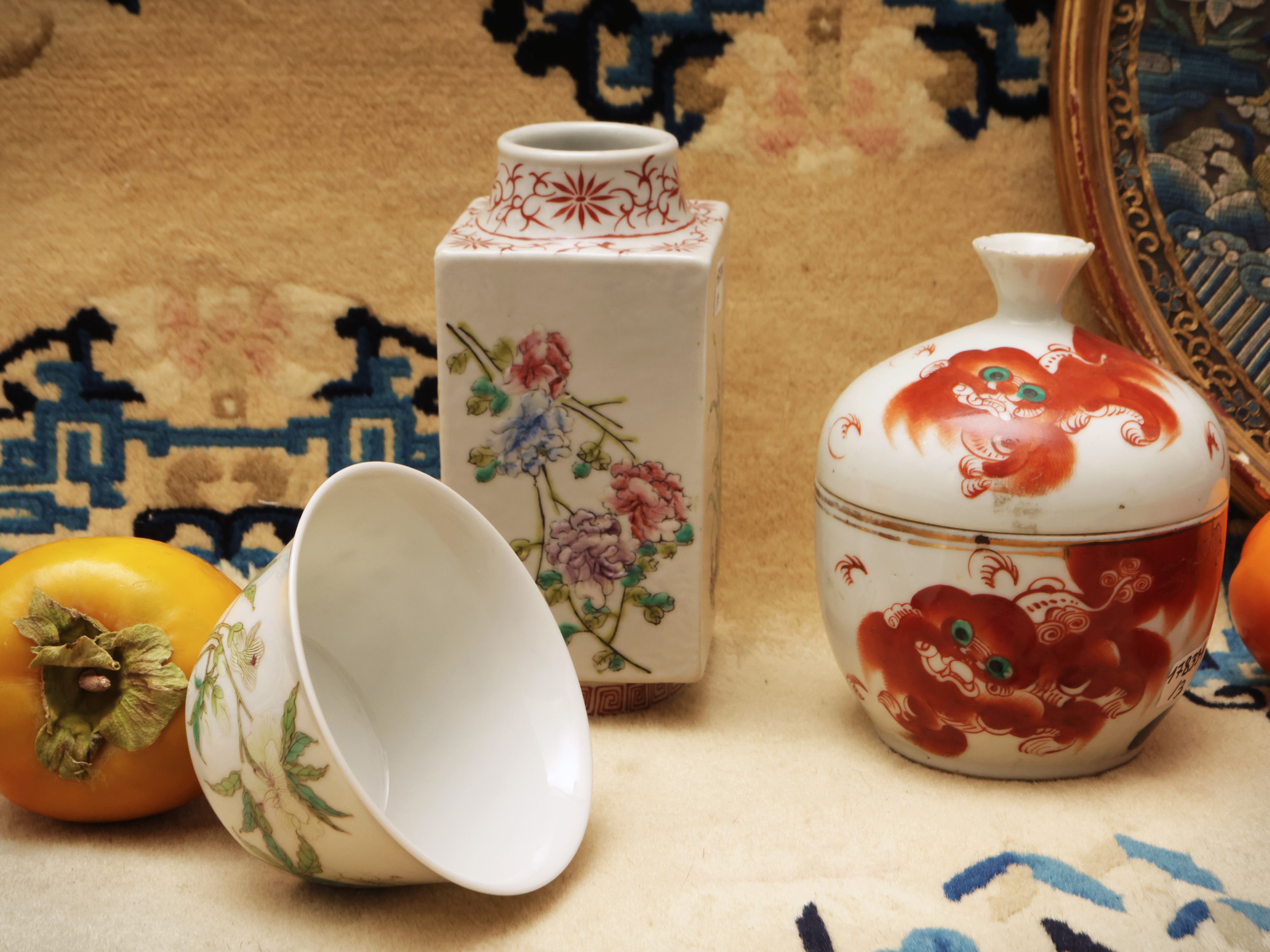
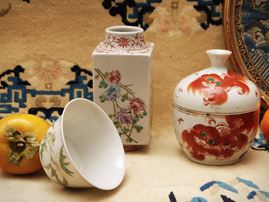
A group of three porcelains, China, late Qing dynasty – early Republic period
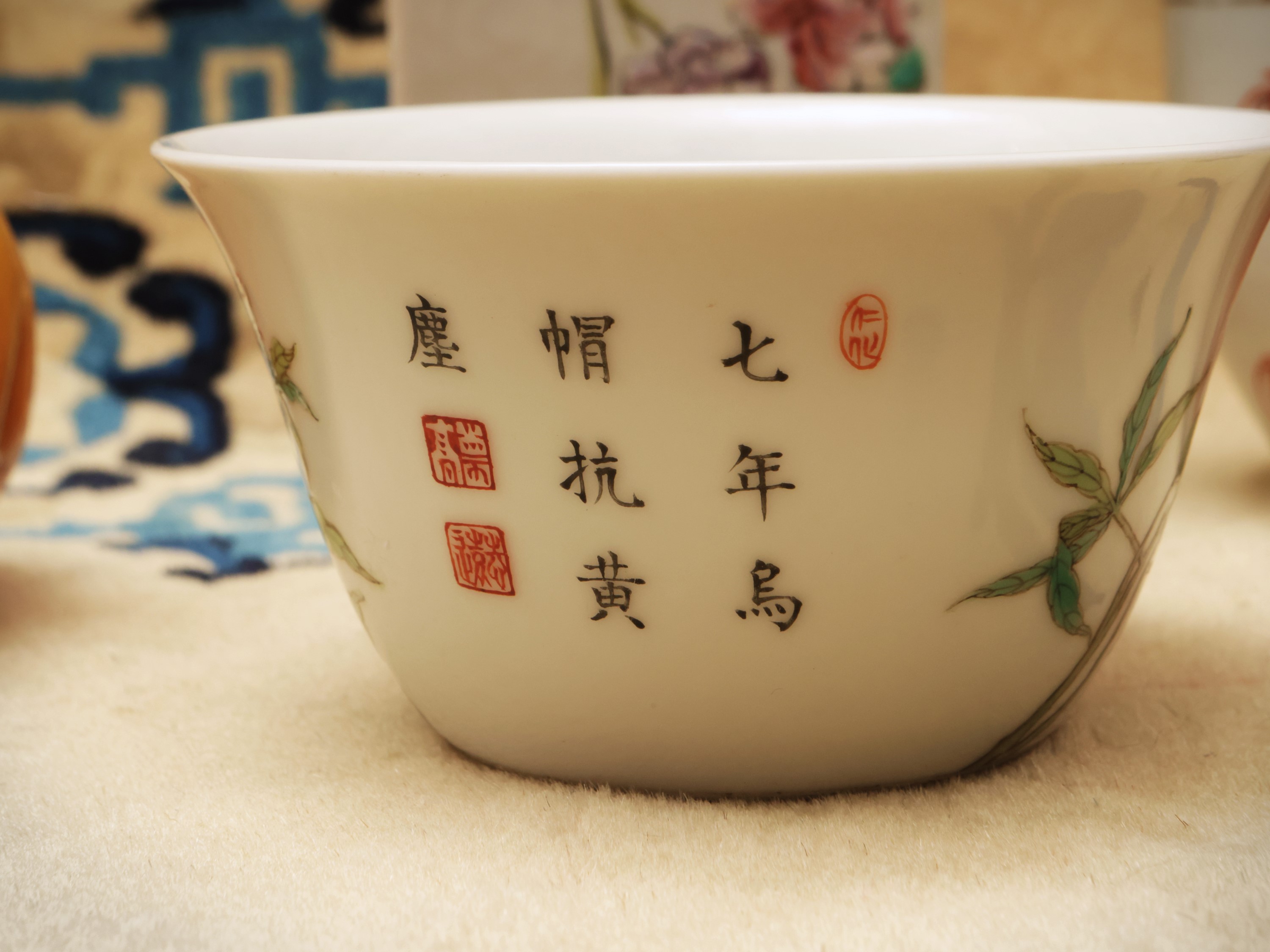
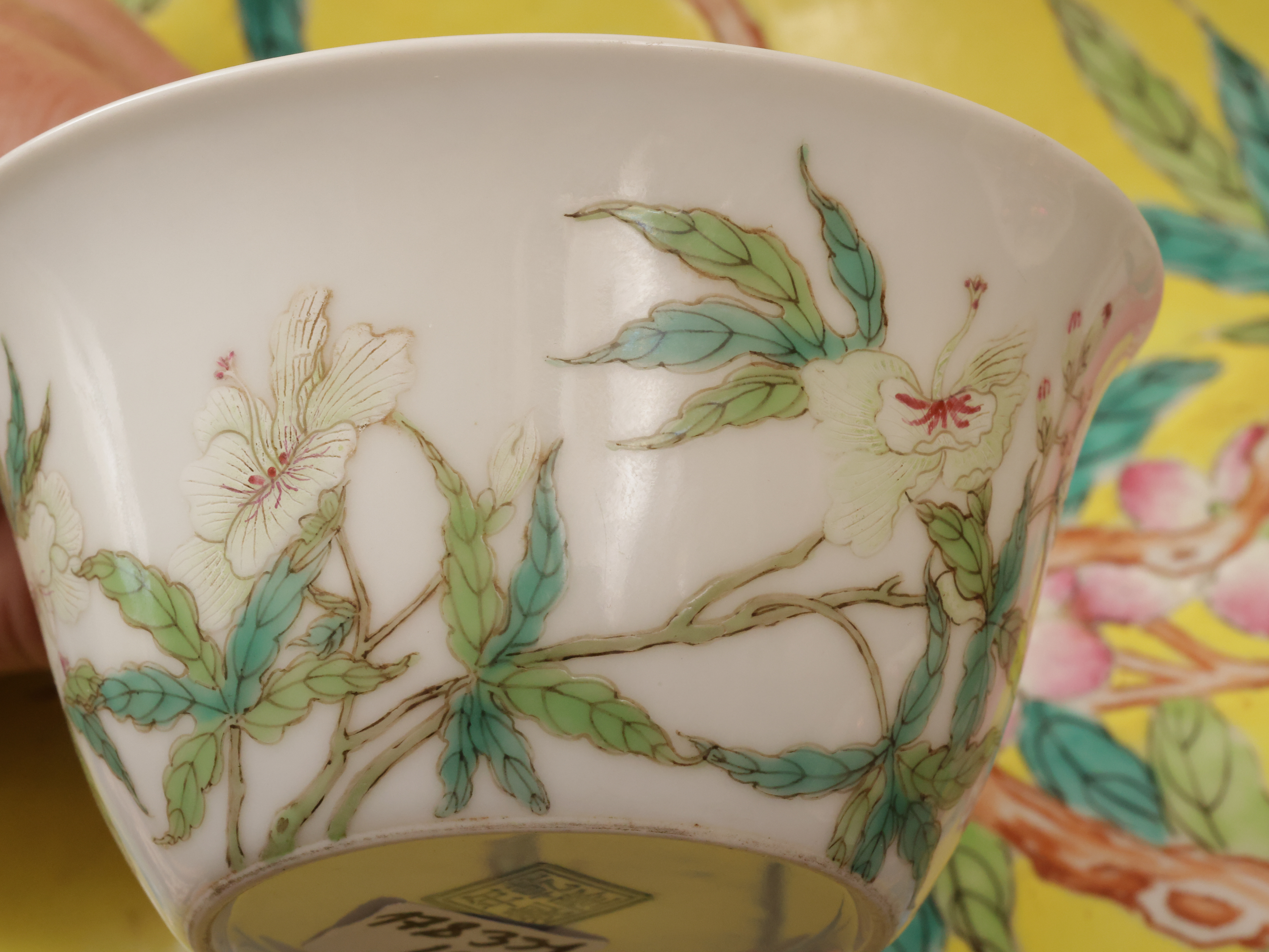
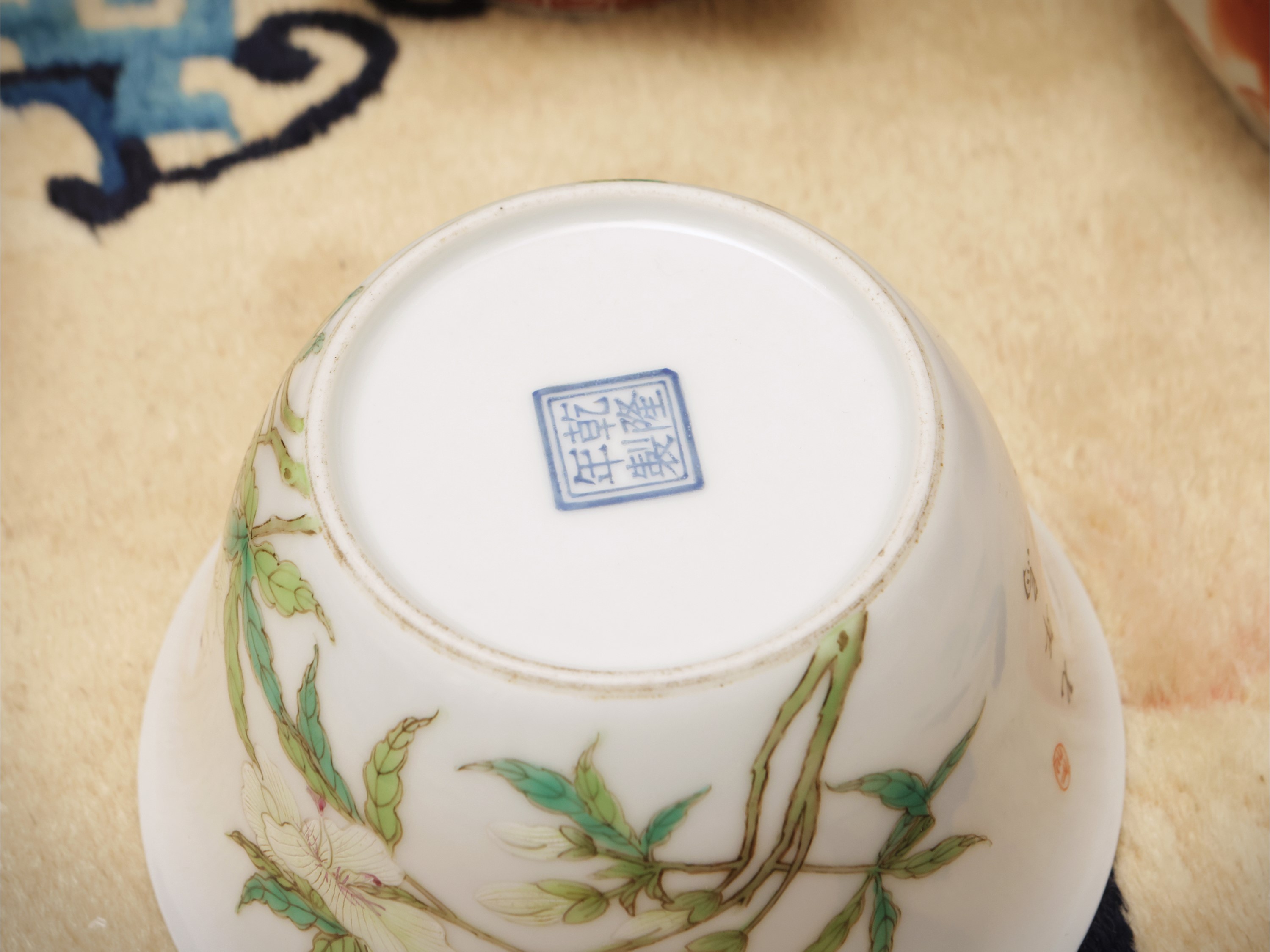
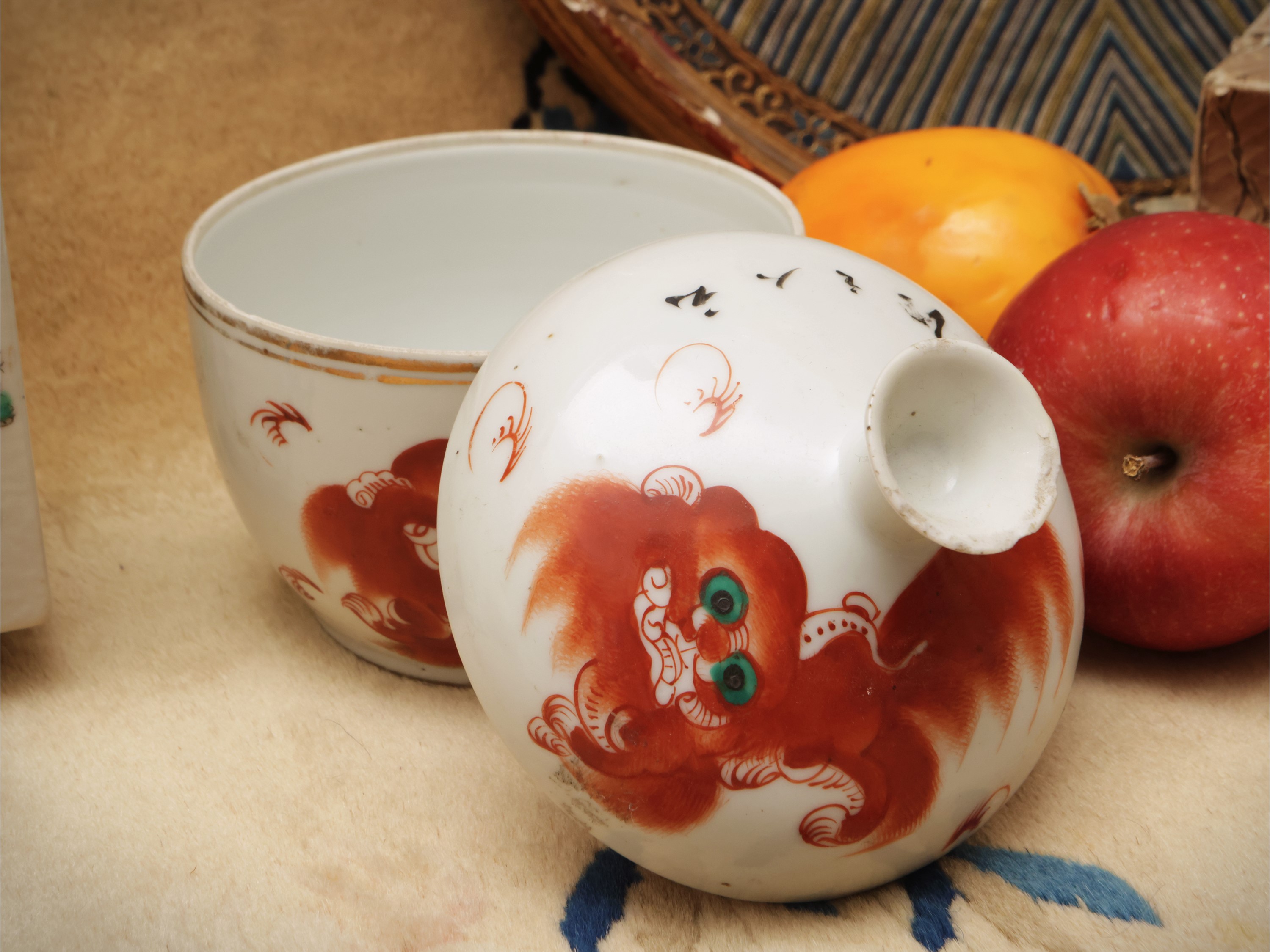
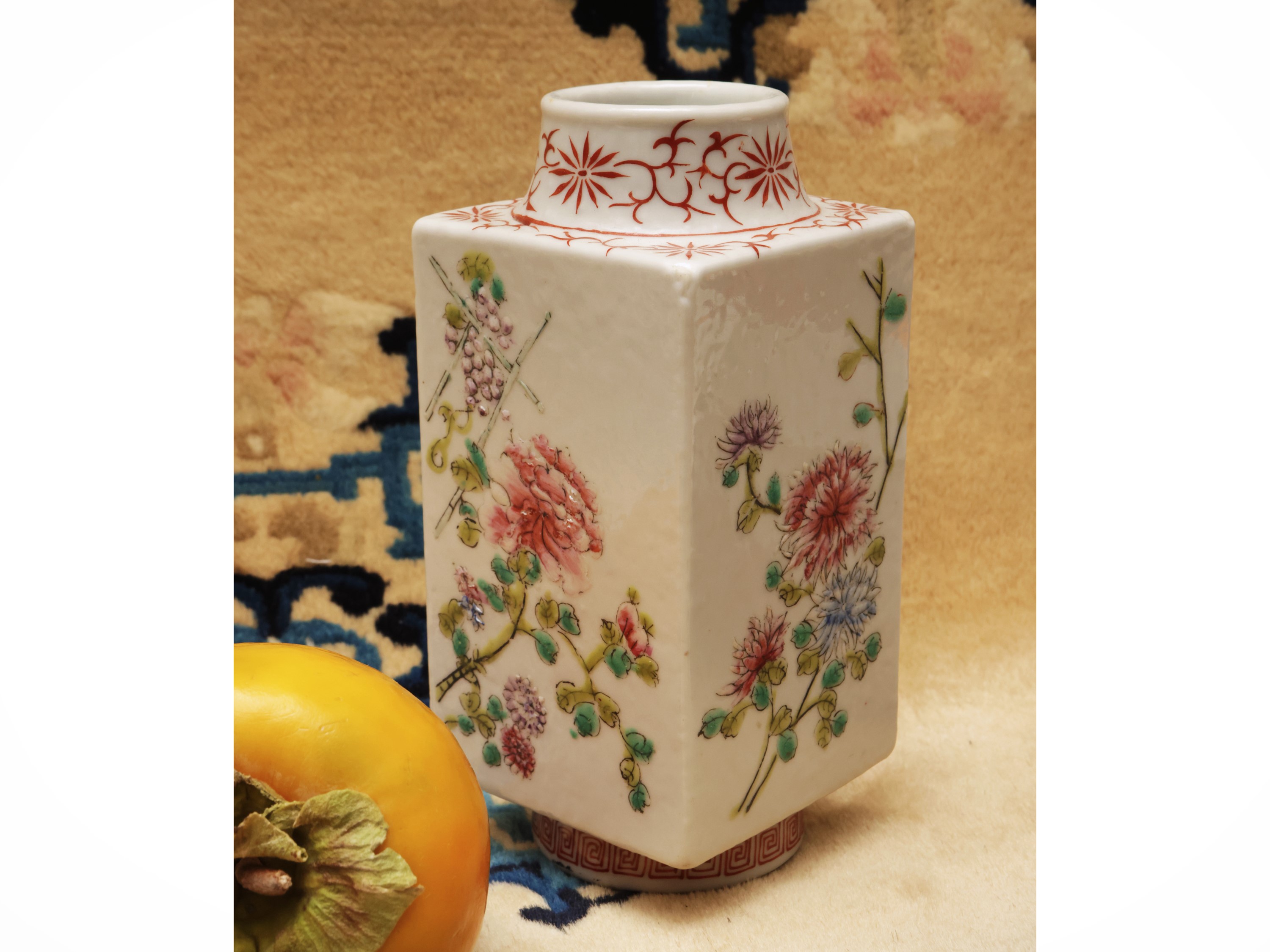
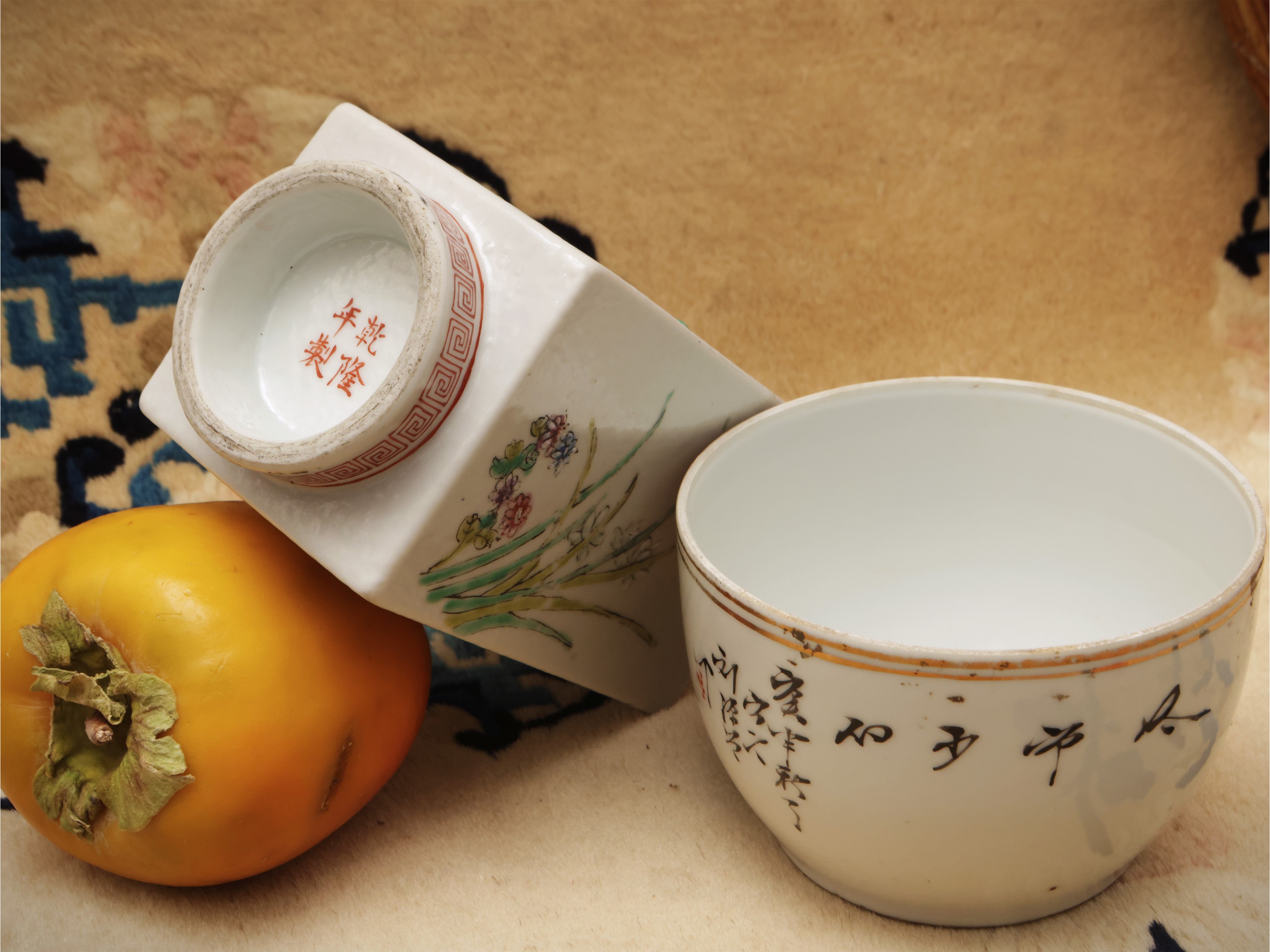
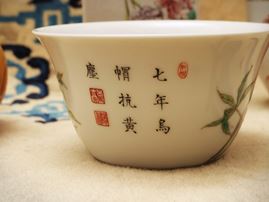
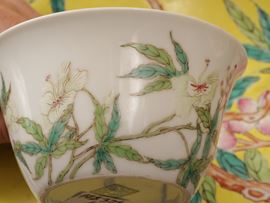
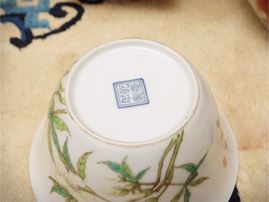
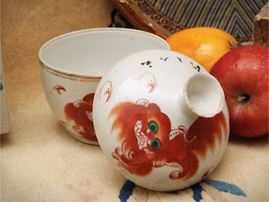
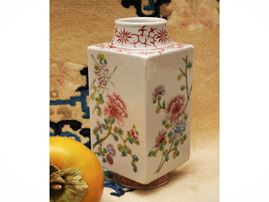
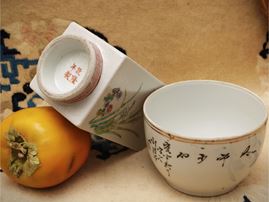
comprising a falangcai enamelled cup inscribed with the verse Qinian Wumao Kang Huangchen “七年烏帽抗黃塵,” echoing the enameled depiction of a white hibiscus (Hibiscus syriacus), signed by an artist surnamed Gao with seals “Renhua” and “Gao yin,” and bearing an apocryphal underglaze blue “Qianlong nianzhi” mark to the base; a square cong-shaped famille rose vase with floral decoration and an iron-red “Qianlong nianzhi” mark; and an iron-red enameled taishi shaobao covered bowl with geometric borders.
The white hibiscus on the cup symbolizes purity and noble restraint. The Tang poet Yu Hu wrote in Seeking the Hermit Li Yi’s Old Home: “槿籬生白花” (“White hibiscus blooms by the hedge”), evoking the moral integrity and self-cultivation of the recluse. The motif became a symbol of refined detachment and virtuous solitude, ranked among the “flowers of the gentlemen” together with plum, bamboo, orchid, and chrysanthemum.
清末至民国初年 珐琅彩白木槿马蹄杯、粉彩花卉琮式瓶及矾红彩太师少保盖盅 包括一件珐琅彩马蹄杯,题诗“七年乌帽抗黄尘”,呼应珐琅彩绘白木槿 (Hibiscus syriacus),署高姓款并钤“仁化印,底书蓝料《乾隆年制》寄托款;一件粉彩琮式瓶,绘花卉纹,底署矾红《乾隆年制》款;及一件矾红彩太师少保盖盅。 押手杯中白木槿花象征清净高洁。唐代诗人于鹄《寻李逸人旧居》云:“槿篱生白花”,以庭前白槿衬隐者清修之志。自此,白木槿于文人画与诗词语境中常寓隐逸淡泊、出尘自守之节,与梅、竹、兰、菊并列为君子之花。
清末至民国初年 珐琅彩白木槿马蹄杯、粉彩花卉琮式瓶及矾红彩太师少保盖盅 包括一件珐琅彩马蹄杯,题诗“七年乌帽抗黄尘”,呼应珐琅彩绘白木槿 (Hibiscus syriacus),署高姓款并钤“仁化印,底书蓝料《乾隆年制》寄托款;一件粉彩琮式瓶,绘花卉纹,底署矾红《乾隆年制》款;及一件矾红彩太师少保盖盅。 押手杯中白木槿花象征清净高洁。唐代诗人于鹄《寻李逸人旧居》云:“槿篱生白花”,以庭前白槿衬隐者清修之志。自此,白木槿于文人画与诗词语境中常寓隐逸淡泊、出尘自守之节,与梅、竹、兰、菊并列为君子之花。
h cm 5.3 13.5 15.5